
Companies like Apple, Fitbit, and Johnson & Johnson are among those in a new pre-certification pilot program.
Companies like Apple, Fitbit, and Johnson & Johnson are among those in a new pre-certification pilot program.

Why the Canadian genetic medicine startup Deep Genomics earned the money.
"Your IT vision needs to relate to your business: who you want to be and how you want to perform. It’s always in service to that, not just an independent pursuit of gadgetry."
The American public is interested in consumer DNA testing, but lacking in knowledge about genetics and privacy.
Study shows certain apps may help manage mental health symptoms, but does not address speculation that smartphones may have negative mental health impacts overall.
Precision Medicine Group today launched its Precision Value & Health initiative to try to find ways to address that question.
The work presented at EASD demonstrated that patients were able to achieve rapid glucose control and maintain long-term A1C reductions
“It’s a huge validation, coming from the country’s 4th largest insurance company," Cogitativo CEO Gary Velsquez said.
Open-source, collaborative, and blockchain constrained, Morpheo is starting with sleep disorders and looking far beyond.
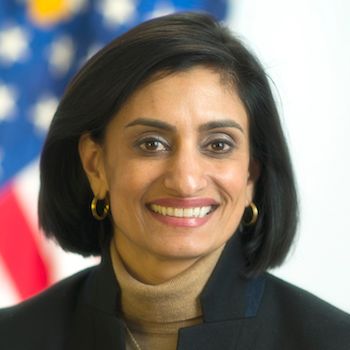
CMS has launched a survey, and Seema Verma has written an op-ed, intended on garnering new perspectives for the Innovation Center.
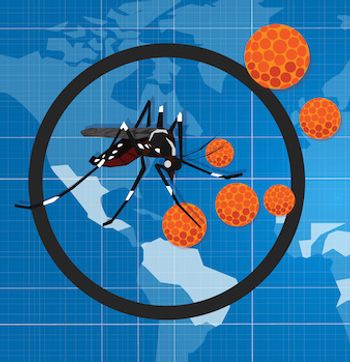
The unit will be capable of producing up to a billion genetically-modified mosquito eggs per week.

Two physicians from UCSF call on the medical Accreditation Council to raise the bar on how it determines physicians can be trained.

The leading medical institution announced two partnerships to make its insight more accessible.
LifeMine champions its “genomically-enabled drug discovery engine” that combines artificial intelligence with synthetic biology.
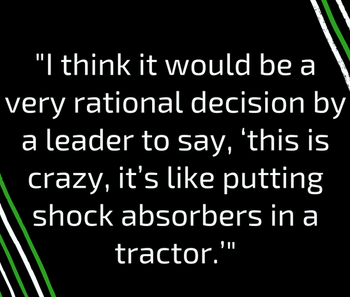
Marco Huesch speaks on “cozy duopolies and oligopolies” in regional healthcare markets, and what it may take for analytics innovation to thrive.
“Sometimes we realize, 'Watson got that one right and we got it wrong," one of its trainers at MSKCC said. Still, it has work to do.
"It improves how kidneys are allocated, and it improves the rationalizations of doctors and patients."
The application receives marketing authorization as a device, and is not intended for treatment of opiate dependence.
As Amazon threatens both retail sales and a pharmacy play, Target seems to intent on building its own retail-pharmacy-provider ecosystem.

Novartis joins other pharma companies looking to use the iPhone's sensory capabilities to study movement-related conditions.

Pager CEO Walter Jin spoke to Healthcare Analytics News about the goals of the partnership and his company's AI integration.

The plans could be of benefit to those with chronic conditions that require recurring clinical visits.
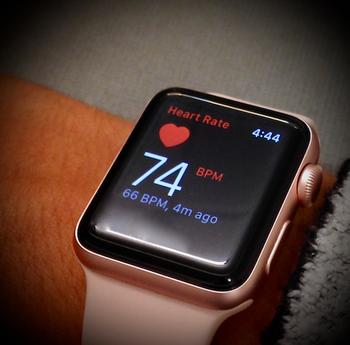
The company’s announcements about the Watch's heart rate monitor may represent a shift from fitness convenience to medical device.

Marco D. Huesch, MBBS, PhD, has deep thoughts on the role of analytics in healthcare. He also has an unbelievably deep well of experience to pull from.
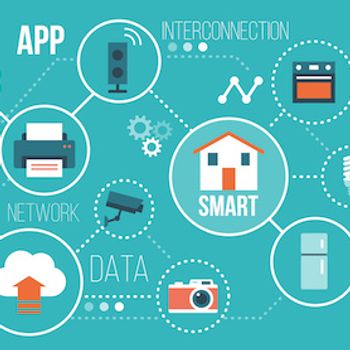
Detecting an infectious disease is almost, by definition, an after-the-fact-activity, but halting its spread is more possible than ever.

Florida hospitals are offering free telehealth, but concerns about interoperability abound in the state with the US's largest elderly population.
"We gave clinicians suboptimal cars, didn’t build roads, and then blamed them for not driving,” the authors said of the transition’s nearsightedness.
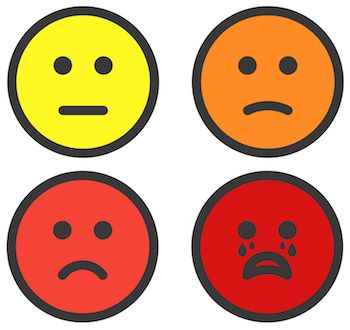
The novel tech represents an improvement on the visual analog scale, but does not account for several patient variables.

One of the co-authors of NEJM article on inflated machine learning expectations spoke to HCA News about what inspired his commentary.
Antov, Deeken, and Killian return with five more tips on how health companies can catch up to other industries in their use of analytics for business.