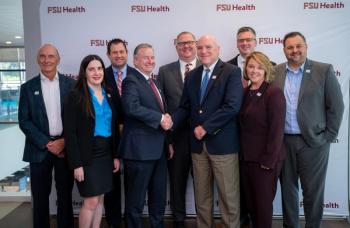
They have finalized agreements to develop FSU Health. Officials say they plan to offer more services across North Florida.
They’re looking to create a 39-hospital system. Allina would join Sutter Health, and the California system vows to invest $2 billion in Allina’s properties in Minnesota and Wisconsin.
In the biggest hospital deal of the year so far, Sutter Health and Allina Health announced plans to join forces and create a system with 39 hospitals and $26 billion in revenue.
Under the deal, Sutter Health plans to acquire Allina Health, with Allina becoming the Upper Midwest Division of Sutter Health. They announced Tuesday that the systems have signed a letter of intent to come together. If the deal is finalized, they would create one of America’s largest nonprofit hospital systems.
Regulators must sign off on the transaction, but the systems say they are hoping to finalize the deal by the end of 2026.
Sutter Health, which operates 27 hospitals, is based in Sacramento, California. Allina Health, which runs 12 hospitals, is based in Minnesota and its market includes western Wisconsin.
Warner Thomas, president and CEO of Sutter Health, touted Sutter’s planned investments in the Midwest system. Sutter plans to invest more than $2 billion in Minnesota and western Wisconsin, and Thomas mentioned plans to expand the number of ambulatory and specialty care locations in Allina’s markets.
Thomas also said Sutter would bolster Allina’s AI and digital capabilities.
“By bringing together our complementary strengths, geographies and expertise, we have an opportunity to expand access, improve affordability and accelerate innovation in ways that will better serve patients, caregivers and communities across Northern and Central California, Minnesota and western Wisconsin,” Thomas wrote in a
“Together, we aim to build a healthcare innovation engine that accelerates how ideas move from development into real improvements in the health of the patients and communities we serve,” Thomas wrote.
Assuming the planned merger is approved, Thomas would lead the new organization and remain Sutter’s CEO and president. Lisa Shannon, president and CEO of Allina Health, would continue to hold that title.
Even as Allina becomes Sutter’s Upper Midwest Division, the systems said Allina would retain its name and brand and keep its regional headquarters in Minneapolis.
“We are incredibly excited for the opportunity to harness the collective strength of our two mission-driven organizations to make a difference in the lives of our patients, communities and care teams,” Shannon said in a statement. “As one nationally leading, locally committed nonprofit health system, we will be uniquely positioned to be at the forefront of innovation, building upon the expertise of our physicians, advanced practice providers, nurses and team members to chart a new path for healthcare.”
Sutter and Allina said one of the goals in the deal is to ensure both access and affordability for patients. They also pledged to boost the recruitment of clinicians and expand research capabilities.
Sutter Health has seen strong revenue growth over the last few years. The system reported $19.8 billion in revenues in 2025, up from $18.2 billion the previous year and $16.1 billion in 2023.
Fitch Ratings gave Sutter a stable outlook in
Allina, the market leader in the competitive Twin Cities region, has received
Under Minnesota state law,
Vince Vickers, the U.S. healthcare advisory leader for KPMG, said he expected to see some large health systems considering more deals, if they offered strategic advantages. In an interview at the HIMSS conference last week (several days before the Sutter-Allina announcement), Vickers said that he saw the potential for some bigger systems to look at options to acquire other strong organizations in different areas.
“It's more geographic expansion … so, what are some other key markets that are available to them to be competitive in,” he said.
Sutter Health has also undertaken plans to build a