
The Nike founder and his wife are providing funding to build a new women’s hospital and to expand heart care.
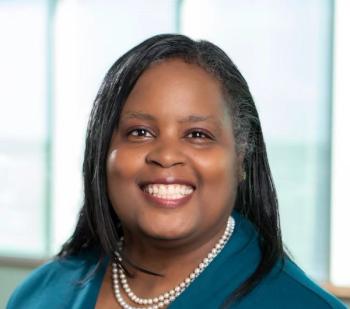
Leah Binder talks with Chief Healthcare Executive® about her optimism for progress, the newer focus of healthcare leaders, and work that still must be done.
Over the years,
As president and CEO of The Leapfrog Group, Binder has pointed out where hospitals have fallen short, especially in the early part of the decade when
Twice a year, the Leapfrog Group publishes report cards on hospital safety, and the group found that
Binder tells Chief Healthcare Executive® that she is very optimistic that hospitals can do better.
“We are close to truly overcoming the worst problems in patient safety,” Binder says.
“We'll never be perfect,” she says. “I'm not saying that. But I think we're going to solve it soon. I think we're accelerating progress due to a lot more energy and focus from especially hospital leaders on the problem, a lot more knowledge about how to solve it, and technology.”
(See part of our conversation in this video. The story continues below.)
‘They want it to happen’
To be clear, Binder is hardly ready to say there’s no room to improve. On the contrary, she says hospitals still have to reduce infections, falls and other preventable events that harm patients.
“I'm not saying we're where we should be,” Binder says. “We are not where we should be, but we are seeing real progress, and it's in really good numbers and good data, and so I just, I just have a good feeling about where we're headed.”
In December, The Leapfrog Group offered top honors for hospitals and surgery centers, recognizing more providers than ever before. In its 2025 awards, 157 hospitals and 37 ambulatory surgery centers received recognition, a 16% increase from the previous year.
Binder says she’s heartened to see hospital executives and boards placing a greater emphasis on safety measures.
“They want it to happen,” she says. “I mean, people do not want unsafe hospitals. Nobody wants that. It's just that nobody's been able to figure out how they can get out of it. We're starting to figure it out. It just feels like we're hitting a tipping point, and I've just never seen energy like this, and I've never seen real progress like this.”
Binder says she understands that there have been skeptics who have questioned if hospitals would make significant headway on patient safety, but she says the recent gains can’t be dismissed.
“There's lots of cynics out there who will tell you, ‘Oh, nothing ever changes in patient safety.’ And frankly, that's been true for decades,” Binder says. “It's not true anymore. It changes now.”
‘They need to do much more’
Health systems have struggled to reduce hospital-acquired infections for decades, Binder says. She says it’s been a problem for more than a century.
But in the past decade, some infections have dropped from 20% to 40%, Binder says. Now, some infection rates are lower than they were before the COVID-19 pandemic.
“It's a good thing and lives have been saved, but it also tells us that hospitals are themselves, strategically focused on getting these infections down,” Binder says. “That is the only way we could have seen this consistent pattern nationally of a reduction in hospital- and healthcare-acquired infections. And it's really gratifying.“I think the hospital industry should be celebrating this. They truly should be proud of this. This is truly showing that this industry stepped up and got something accomplished,” Binder says.
But again, Binder says hospital-based infections are hardly a memory, and health systems need to better.
“They need to do much more,” Binder says. “We still have too high a rate. But I think they know that, and I'm cautiously very optimistic that the hospital industry, once they set their minds to solve this problem, and make it a priority … We'll see this reduced to a rate that will be far more, far more palatable to the American public.”
Binder points to
“There's no other industry that could have a rate of harm like that and ever stay in business,” Binder says.
But Binder says she’s encouraged by recent gains and the focus of doctors, nurses and hospital executives on patient safety.
“This problem is going to get solved, and I think we're on that path,” she says. “I think the tipping point is coming.”