He spoke with us about plans to invest nearly $600 million in the Minnesota system, upgrading facilities and the alignment between the organizations.
The health system has received national recognition over the past year. Dr. Phillip Chang, CommonSpirit’s chief medical and quality officer, talks about the keys to improving patient care.
By his own admission, Dr. Phillip Chang loves data.
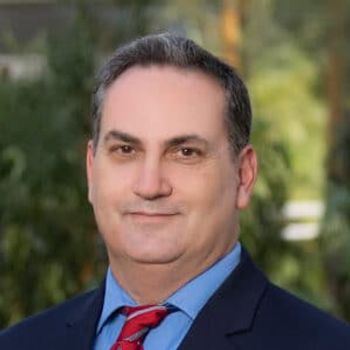
The chief medical and quality officer of CommonSpirit Health, Chang says good data is indispensable in improving patient care.
But he also says poring over data can get overwhelming when it comes to finding ways to improve patient safety.
“If you start looking at the dozens of measures from each external benchmark and the methodologies, you will get lost,” Chang tells Chief Healthcare Executive®.
“So when I think about where to start, I think about what it means to our patients, to our ministry and how we serve our community,” he says. “And if you start there, then things fall in place. Patients first, and then things fall in place.”
Over the past year, CommonSpirit has earned recognition for its efforts in patient safety and quality. In
CommonSpirit was
Chang talks about some of the keys to CommonSpirit’s gains in patient safety, and he says it’s no small feat with a system that operates over 120 hospitals in two dozen markets.
“That's really, really, hard,” he says.
(See part of our conversation in this video. The story continues below.)
Starting small
As CommonSpirit worked to improve patient safety, Chang says it was very important to get alignment throughout the entire organization, which is not easy for a system so large.
But Chang says the system also started small to gain some early progress.
“I love data as much as anybody else. We want to be very, very smart and deliberate about where we tackle, where we focus our resources,” Chang says.
With CommonSpirit operating in so many different areas, some hospitals have different challenges and require approaches for those particular needs.
“What's very true about CommonSpirit, and I suspect other large systems who really are into doing this work and really want to improve, is that you will see that one size does not fit all,” Chang says. “So the only thing that fits all, which is why we started that way, is your patient, your patients and your mission. It's the only thing that fits everybody right.”
With CommonSpirit’s size, as some hospitals make progress in different quality and safety metrics, those lessons can often be replicated across the system, he says.
“We celebrate what's worked really well, and we leverage our size and scale to say, Okay, well, this works well here … And we have to ask that question before we do it: Could it be applied somewhere else? And generally it’s yes, and that's how the cycle goes,” he says.
CommonSpirit has reduced mortality in stroke patients. The health system operates a number of facilities in rural areas, and Chang says a key was improving the speed of transferring patients from smaller facilities to more well-equipped hospitals.
The health system established a national transfer network to improve transfers, and to ensure patients are directed to the right facility where they can get care quickly.
“That allows us to move patients, to get the right care at the right place at the right time,” he says.
Beyond numbers
Even with Chang’s respect for data, he says some of the key ingredients for success aren’t necessarily showing up in quantifiable ways.
He recalls visiting CommonSpirit’s clinics in Tacoma, Washington, where staff made significant improvements in patient care. When he asked a clinic leader the ingredients to their success, Chang recalls, “He said, ‘It’s not your numbers.’”
Instead, the clinic leader pointed to the staff, who know each other well and share a similar commitment to patient care.
“It was a family of dedicated physicians and staff members and nurses who are on a first name basis, who are basically just about taking care of patients,” Chang says.
He says that dedication, across the health system, has made a difference.
“All of our people, frontline nurses, frontline physicians, they deserve a lot of credit,” Chang says. “Not just because of the outcomes, but also because we know day in, day out, they want to do what's best.”
CommonSpirit’s nurses in particular have driven progress in safety metrics.
“They are the guardians of patient safety,” Chang says of nurses.
Chang also says that chief nursing officers often lead presentations on patient safety, and he says that’s intentional. He says that helps signify accountability and responsibility.
Chang also points out to others who aren’t often thought of in terms of patient safety.
“It's everybody,” he says. “And this is the part where I don't think a lot of people appreciate, is that it's not the doctor who's got the quality, it's not the nurse who's got the safety. It's also the operator, it's also the supply people. It's also the call center people.”
Chang also stresses the importance of health system leadership being engaged in patient safety and quality.
“The docs know what to do. The nurses know what to do,” he says. “We just have to give them the tools to do it.”
‘A united front’
Chang points to the value of teamwork in improving patient safety and quality.
“We need to make sure that the care team works as a team, as a united front, and it needs to be real and visible to the patient and families,” he says. “And part of that care team really includes the patient and family members. So, when you do it all together, that has an impact.”
Health systems that are looking to make gains in patient safety need to recognize that it’s a daily grind.
“It's about diligence. It's about paying attention to the details,” he says.
He also emphasizes the importance of getting the buy-in of the board of directors, which he says is especially important for larger healthcare organizations.
But he says even smaller organizations need strong backing from their board and clear alignment across the system.
“That alignment allows you to do everything else you want to do,” he says.