Maria Ghazal, president and CEO, talks about finding consensus across the healthcare ecosystem and in Washington.
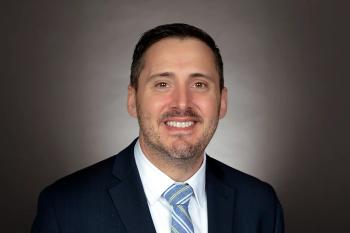
Brad Hoyt, the system’s chief medical information officer, talks about the rollout and saving time on documentation.
Over years of practicing internal medicine, Dr. Brad Hoyt recalls the aspect of his work that he dreaded.
It was the documentation.
Hoyt, the chief medical information officer of Ardent Health, says his motivation in his current role is to ease the headaches for the system’s doctors.
“That's kind of why I wake up in the morning,” Hoyt tells Chief Healthcare Executive®. “I remember what I hated from those 27 years, and the first thing was writing notes.”
Ardent, which operates 30 hospitals and more than 280 other patient care locations across six states, recently hit a milestone with its use of ambient AI. The health system has now used ambient AI for more than 1 million patient visits.
Beyond the number of visits, Hoyt says Ardent’s data shows that the ambient AI is doing what he hoped: it’s saving time for doctors. Ardent’s data shows that doctors are saving three hours a week on documentation.
Hoyt says that analysis is based on tracking how much doctors are typing - and not typing. He says the measuring of clicks offers a more reliable estimate than simply gauging responses from physicians.
And he’s grateful to see doctors spending less time updating patient notes at home, a practice doctors ruefully refer to as “pajama time.”
“We've seen a three-hour decrease in that pajama time,” Hoyt says. “So pajama time is, I'm going to go home, I'm going to put the kids to bed or go watch something, and then I'm going to finish up my notes for the day. Three hours is incredible to give that back.”
After initial testing with some doctors, Ardent began implementing ambient documentation technology across the health system in September 2025. Ardent is using Ambience Healthcare’s AI documentation platform.
More health systems are
He sees it as a valuable tool for Ardent to attract and retain doctors, since much of the system operates in states such as Oklahoma, Kansas, Idaho, and New Mexico.
“We are not the East Coast. We're not the West Coast,” he says.
But he says the ambient documentation has been especially well-received by physicians, including some who have worked for Ardent for years. He says he has heard from doctors who were considering retirement partly because they were saddled with too much time updating patient records, but are now opting to continue working because of the time they are saving with ambient AI.
“I was quite surprised when I started getting emails … ‘You told me that I'd like this and I do,’ or ‘You didn't know this, but I was going to retire, and now I'm not,’” Hoyt says. Those aren't emails that an IT guy gets.”
Ardent’s doctors with the ambient tools are using them in 87% of ambulatory encounters. That’s more than twice as often as other systems, Hoyt says.
“I think that the most expensive software you can buy is the stuff you buy and your users don't use it,” Hoyt says, noting that Ardent’s physicians are embracing the ambient AI platform. “We've got positive votes, got all sorts of testimonials. It's been a great experience.”
When Ardent rolled out the ambient AI platform, the system identified doctors that could share their experiences with others. He says doctors communicating their success with it helped win over others.
“The providers sold it to other providers, and that just kind of spread like wildfire,” Hoyt says. “That doesn't happen in IT, okay? When the providers are selling it, that makes my job a whole lot easier, and I think we picked the right people.”
When asked for advice for other health systems in rolling out ambient AI, he stressed the importance of ensuring that it meshes with workflows. Hoyt also emphasizes that Ardent Health “chose the right pony” for its ambient documentation.
“It has to work for the providers,” Hoyt says.
“Pick the right horse and then roll it out in a way that you can let your providers sell it for you, and then that makes things a lot easier,” he adds. “Also, when they have questions, be there to answer those questions.”
Hoyt also says that patient engagement surveys says patients are welcoming having more natural conversations with doctors as they use ambient AI. Doctors can look directly at patients during a visit, instead of facing a monitor and typing away.
He says there have been “huge jumps in patient satisfaction.”
“And I think it's all due to the eye contact that you can maintain,” he says.