Maria Ghazal, president and CEO, talks about finding consensus across the healthcare ecosystem and in Washington.

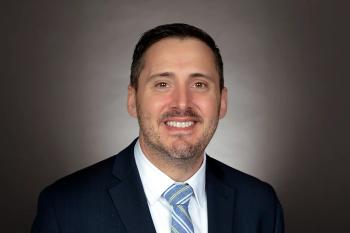
Dr. Tim O’Connell, co-founder and CEO of emtelligent, talks about the company’s growth and getting insights for health systems and payers.
A number of forces are coming together at the right time, Dr. Tim O’Connell says.
O’Connell is the co-founder and CEO of emtelligent, a healthcare technology company working with dozens of healthcare organizations, including payers and health systems. The company utilizes AI technology to help organizations get more insights from their data, including clinical records and billing information.
In a recent interview with Chief Healthcare Executive®, O’Connell said that heatlhcare organizations are getting better access to data. Organizations are seeking AI tools to get more insights and efficiencies.
“This is a great moment for emtelligent, absolutely,” O’Connell says. “We've been hard at work on this problem since 2016 and there's been a lot of interest growing steadily over the last 10 years. But this year it has absolutely exploded for us.”
Patient records are bursting with unstructured data, including notes from physicians. To make sense of all of that and get more relevant information to help guide care, emtelligent’s AI technology scours that information to help organizations make better decisions.
“You have unstructured clinical data, chart data, and you need to know what's in that, and you need it done at scale,” O’Connell says.
O’Connell says emtelligent’s solutions can review messy data, including documents that have been faxed repeatedly or pages with tables.
A radiologist based in Vancouver, British Columbia, O’Connell also worked as a network engineer for Bell Canada and Nortel Networks. He says he was drawn to the idea of developing tools to make it easier for healthcare organizations to decipher confusing information in patient records.
“Parsing clinical text is very, very difficult,” he says. “And so being able to teach computer models to be able to accurately extract clinical information is very important.”
O’Connell says getting access to better data will help lead to advances in patient care, as well as improved efficiencies. And he says there’s a glaring need for more structured data.
“We need more data research and analytics in health care,” O’Connell says.
“We don't have nearly enough checks and balances and controls in the delivery of healthcare, and we need more of that to make our system more efficient and more sustainable. And in order to do that, we need high quality data,” he adds.
O’Connell says the company is well equipped to work with big organizations. The company’s software can also assist with academic research, simplifying the search through vast amounts of data.
He also points to the great team working at the company as another factor in its success.
“People are what it's all about, and recognizing the strengths in people,” he says. “Not everyone is the all-singing, all-dancing, absolute rock star at everything, but it's finding what people are good at and using that strength as part of a team where you all feel like you're rowing the boat in the same direction. That's honestly the recipe for success, I think, in any team.”
Even with the demands of running emtelligent, O’Connell says he still practices one or two days a week.
“Being able to practice medicine is a privilege, and it's incredibly rewarding,” he says. “And you can have a bad day at the company and think about the day you had yesterday at the hospital and be very thankful that you were able to help patients. And then you can be having a bad day at the hospital, and then think about the company, and how you're helping change how healthcare is delivered, and think about, hey, we're fixing the system problem.”