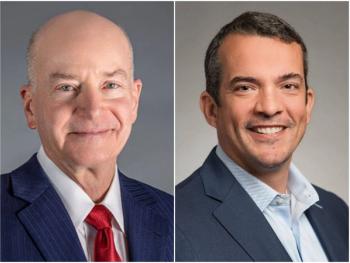
A dozen health systems have joined the collaborative. Elad Walach, CEO of Aidoc, talks with us about using AI for better and faster diagnosis.
The system is overlooking millions of people living with undiagnosed or under-treated diseases.
Precision medicine is a well-known term. Using diagnostics, biomarkers, genomics, and other patient-specific information to tailor treatment once a disease has been identified is well established and accepted practice.
Precision health, by contrast, is a newer term, one without a fully consistent definition or implementation. Broadly, it spans the full continuum of care, from maintaining health and identifying disease earlier to personalizing treatments after diagnosis.
Much of the healthcare industry's innovation and investment has focused on the nominal extremes of precision health. On one end prevention programs, wearables, and wellness initiatives generate new streams of lifestyle and behavioral data designed to keep healthy people healthy. On the other, pharmacogenomics, advanced diagnostics, and molecular testing depend on the collection of increasingly detailed clinical data to guide treatment for sick people once disease is identified.
Between those two poles sits a larger and often overlooked population: millions of people living with undiagnosed, misdiagnosed, or under-treated disease - their conditions progressing silently (often for years) before diagnosis or treatment.
This overlooked cohort includes individuals with early cardiovascular disease, undetected cancers, metabolic disorders, autoimmune conditions, and other illnesses that generate actionable data long before symptoms materialize or a clinical crisis occurs.
This is healthcare’s invisible middle. And it is the industry’s biggest missed opportunity. Not because the requisite data is missing, but because it exists, largely unused.
The invisible middle problem isn’t unsolved because of a lack of data. Electronic health records, lab results, imaging studies, and routine clinical interaction data are often present long before patients arrive at emergency departments or specialists’ offices.
The challenge is not collecting more information about these patients; it is operationalizing what we already know so we can identify them sooner and connect them to appropriate care, consistently, at scale, and in time to change outcomes.
That distinction matters because it reframes the entire problem. Precision in this context is not a data problem. It is a delivery problem.
Chronic disease may cost the United States as much as
This is what makes the invisible middle so consequential. These are not future patients. They are current patients with diseases that are already developing, progressing, and generating meaningful signals.
So, how do we effectively identify and serve the invisible middle? Where and how should we invest and what should we operationalize?
Health systems have been investing in analytics and insight generation for decades and those investments have produced real advances. For example, a 2025
But insights aren’t actions and algorithms aren’t interventions.
Prediction, by itself, changes nothing. An algorithm that flags a patient at risk for cancer or heart disease creates value only if that patient receives the requisite follow-up, testing, and treatment. Too often, that doesn’t happen. Patients fall through the cracks. Diagnoses are delayed. Preventable complications occur.
The paradox is that this is happening in the age of AI, abundant data, and commoditized computing. Meanwhile, the healthcare system is absorbing the clinical and financial burden of late-stage disease it had the information and technology infrastructure to prevent.
The clearest evidence that solving for “the invisible middle problem” is related to delivery, rather than data, comes from precision medicine itself, the most advanced, best-resourced corner of the precision health landscape.
A recent report from UPMC’s Center for Connected Medicine found that
Even mature precision medicine programs face this challenge. According to
Across the rest of healthcare, the pattern is the same. Care pathways, staffing models, reimbursement schemes, and clinical workflows are built to respond to disease once it becomes visible: to react to clear symptoms that ultimately drive diagnoses and referrals. This operating model is not built to find and engage the patients who are already progressing toward disease but have not become uncomfortable enough to seek care.
Healthcare’s precision health challenge is no longer simply identifying risk. It is consistently and programmatically moving patients from identification to intervention.
Healthcare does not need more algorithms. It needs to reliably identify, engage, and move the right patients into care before disease progresses to the point where it becomes hard to treat, life altering, and financially burdensome.
If the first generation of healthcare innovation answered the question “who is at risk?”, the next must answer a harder question: “how do we make sure something happens once we know?”
That requires capabilities healthcare has historically underinvested in, and it requires a shift in mindset: from precision as a diagnostic and treatment capability to precision as a new operating system for the care continuum. Without that shift, even the most accurate prediction remains little more than an ephemeral, unactioned observation. Interesting, but not impactful.
Generating and leveraging more and more data using existing methods will continue to help make medicine better and, over time, more precise. But we don’t have to (and shouldn’t) wait for future breakthroughs to make meaningful progress.
Greater precision is within our grasp now. We need to use the data that already exists at scale and surface insights derived from it within an operating model that prioritizes clear pathways to action.
Precision in healthcare will not be defined by who holds the most complete dataset. It will be defined by who can take what they already know and turn it into earlier, more effective intervention for the right patients at the right time.
The next precision health breakthrough will not come from a new algorithm, diagnostic, or therapy. It will come from leveraging the immense clinical and financial opportunity that exists within the invisible middle.
That work doesn’t have to start in the future. It can start right now.
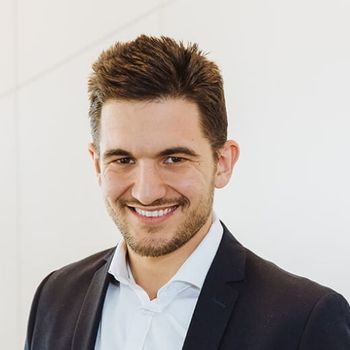
Sean Cassidy is CEO and co-founder of Lucem Health.