The goal is not to replace strategic optimization projects, but to extend their value by monitoring how real operations are changing.
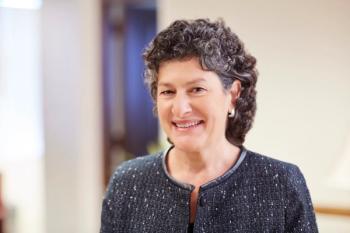
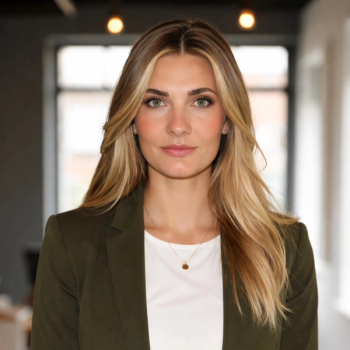
Maria Ghazal, president and CEO, talks about finding consensus across the healthcare ecosystem and in Washington.
Even at a time of bitter divides, it is possible to find common ground, Maria Ghazal says.
Ghazal, the president and CEO of the Healthcare Leadership Council, has worked to find consensus among policymakers since she began in the post nearly three years ago. The Healthcare Leadership Council includes members from across the industry, including hospitals, health systems, insurers, pharmaceutical firms and tech companies.
In an interview with Chief Healthcare Executive, Ghazal says she aims to make progress in Washington and ensure more Americans can get the care that they need.
“One area of consensus for everyone who is in healthcare is making sure that there's access to care, that there's access to coverage … and that there's affordable access to care,” Ghazal says. “And then, what are the outcomes? I think that the true mission of the organization is, how can we have better outcomes for patients?”
“So, if you start with, you have coverage, so you have prevention, and you have a way to get access to the system, then you're more likely to have better outcomes,” Ghazal says. “And whether that's dealing with an emergency or a chronic illness or something, else, those are the types of issues that we're really focused on.”
Ghazal began her role as CEO of the Healthcare Leadership Council in January 2024. Before joining the council, she spent nearly two decades in various leadership roles at the Business Roundtable, a trade group representing top executives at large companies.
Ghazal stresses the importance of access and says she’s worried about the impact of last year’s passage of HR 1, also known as the One Big Beautiful Bill Act. The legislation includes
She says the HR 1 impact on access to care is “tough.”
“Everybody in healthcare was really pushing to say the impact of these changes to Medicaid … it'll be across the board. And most importantly, it will affect people's lives and their health, by limiting coverage,” Ghazal says.
“Everyone's concerned,” Ghazal says. “It will impact the coverage for many Americans.”
Ghazal says the Healthcare Leadership Council aired concerns about the loss of coverage with policymakers and some aspects of the work requirements that take effect in 2027. She says there are concerns about provisions that could force some recipients with illnesses to continue working to maintain Medicaid coverage.
“We'll be watching carefully for what happens, and we will not hesitate to go back to policymakers and say, here's the results,” Ghazal says.
Beginning next year, Medicaid recipients will be required to prove their eligibility for coverage twice a year. Currently, they only must demonstrate eligibility once a year.
While Ghazal says that’s clearly going to be the rule for recipients, she also hopes to see a better process so people don’t “fall through the cracks really through no fault of their own.”
Ghazal also points to the expiration of subsidies supporting the Affordable Care Act, which have led to higher premiums.
The Healthcare Leadership Council is spending a lot of time talking about the expanded use of AI in the industry, Ghazal says.
She says she’s excited about the potential of AI to reduce administrative burdens and help doctors and nurses have more human interactions with patients, with AI tools to handle documentation.
“There's not a leader that I speak with or that's a member of HLC that is not excited,” Ghazal says. “There's so much promise.”
“The fact that it can dive into so much data, I think there's a real promise with cures and with treatments. So there's huge excitement about it,” she says.
Ghazal is also enthusiastic about the potential for AI to be used to streamline the process of prior authorization, including streamlining approvals for treatments and reducing delays and denials of care.
But she says AI technology is moving so rapidly that some in the industry are uncomfortable. And she says there is uncertainty about regulations with AI in the healthcare industry.
Ghazal says it would be preferable to see federal AI standards.
“We certainly don't want state-by-state regulation,” Ghazal says. “As national participants in healthcare, we want a system that is a harmonized federal framework.”
“We need to make sure that we are not going to spend our time complying with one set of rules in one state versus another. It is going to completely inhibit innovation, and it will cause more complications and more cost. It will start to really eat away at the opportunity of AI, and there's just a better way to do this,” she says.
In
The piece also called for healthcare organizations to define deployment standards and to ensure proper governance.
Ghazal says issues such as liability and accountability are key issues to tackle with AI, and she says there must be appropriate guardrails.
“We're increasingly seeing how important trust is with AI,” Ghazal says. “But overall, I think there's tremendous excitement. And everyone is using it, and trying to to stay up with how to use it in the best way to take care of patients.”