

News|Articles|July 30, 2026
The government is going after healthcare fraud. What health systems should know.
Author(s)Ron Southwick
Key Takeaways
- Record FY2025 enforcement featured $6.8 billion recovered and 1,297 qui tam filings, indicating both heightened whistleblower activity and increased front-end investigative volume in healthcare.
- Healthcare comprised $5.7 billion of total recoveries, underscoring persistent FCA vulnerability for providers, systems, and healthcare companies despite historically consistent DOJ attention.
The Justice Department reported record highs in False Claims Act settlements and whistleblower lawsuits. Attorney Taylor Chenery looks at the heightened enforcement and changing landscape.
Advertisement
The federal government is seeing more suits alleging violations of the False Claims Act, and bigger settlements and judgments for cases.
The Justice Department said it recorded $6.8 billion in False Claims Act Settlements in the 2025 fiscal year, with whistleblowers filing 1,297 lawsuits. Both numbers reflect record highs, with data going back nearly four decades.
Healthcare fraud makes up the vast majority of False Claims Act settlements and judgments, representing $5.7 billion of the $6.8 billion recorded in the 2025 fiscal year.
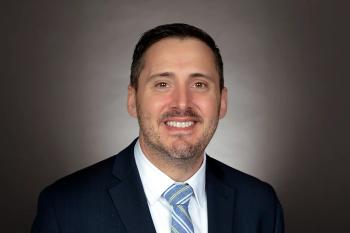
Taylor Chenery, an attorney with Bass, Berry & Sims who focuses on government compliance and investigations, tells Chief Healthcare Executive® that the Justice Department has always taken an aggressive approach to healthcare fraud. But he points out that 2024 had also seen records (albeit short-lived records) in whistleblower suits and settlements.
“I think if you do drill down into the last few years, in particular, there are some signs of increased activity on the front end. So an increased number of False Claims Act matters, in particular, against healthcare providers, healthcare companies, and in last year, in particular, for fiscal year 2025 you did see that reflected also in the total amount of recovery,” Chenery says.
“Last year was the highest single year of monetary recovery under the False Claims Act since the DOJ started reporting those statistics about 40 years ago now,” he adds. “So I think in the grand big picture scheme of things, enforcement, particularly in the healthcare industry … shows no signs of slowing down, has always been consistent. But there are also some signs of uptick from that normally consistent activity in the last few years, in particular.”
Settlements gain attention
Chenery suggests that whistleblowers are seeing the increased number of cases and settlements, and could be more motivated to come forward with claims. He points to two straight record years of “qui tam” suits, where private individuals can bring suits against those who defrauded the government, and potentially receive some of the government’s recovered funds.
“Whistleblowers are not just out there and alive and well, and paying close attention, but also taking that additional extra step to go to the court and file an action,” Chenery says.
Some settlements have been sizable. In April 2025, federal authorities announced
“The healthcare space in particular, absolutely, I think should and is paying attention to some of these larger settlements,” Chenery says.
Federal authorities are also seeing more cases ending in judgment after trial, rather than a settlement to avoid a trial.
Chenery says it’s “a little unusual in the False Claims Act world to see that number of cases go all the way through trial and all the way to a significant judgment.”
Given the penalties under the False Claims Act, many organizations have typically tried to avoid going to trial, he says.
“Those numbers of potential damages can can really rise to, frankly, unbearable thresholds pretty quickly, for particularly for companies that are submitting a large number of claims, and I think that that risk of enormous exposure traditionally has been a strong deterrent to companies being willing to take these cases to trial,” he says.
Health systems must be proactive
Healthcare organizations need to be aware of their own data and claims, Chenery says.
When it comes to potential violations of the False Claims Act, healthcare organizations need to avoid hearing about potential problems for the first time from the government.
“I think the most common mistake, and at a very high level, is being more reactive than proactive,” he says. “What you don't want to do is wait until the government thinks that it's identified an issue or a whistleblower thinks that they have identified an issue, and particularly if it is somehow data-based, something that the company or the organization could have, or arguably should have, at least been aware of before it's raised by the government or a whistleblower.”
If healthcare organizations find they may have done something improper, it will help to show the government that they are aware of the problem and working to address it.
“Particularly if you can say: We've looked at it, we do think it's an anomaly, or we have this explanation as to why it shouldn't support any type of FCA liability … being able to say that from the outset, I think, can go a very long way in setting the tone for any type of investigation or government enforcement action,” Chenery says.
Federal agencies are using AI tools to examine claims and aren’t relying solely on whistleblowers to find potential violations, Chenery says.
He advises healthcare organizations to understand that federal authorities are “extremely data focused.”
“All healthcare providers, and particularly health systems that may be operating broadly and submitting a significant number of claims, they need to be keenly aware of what their own data reflects,” he says. “And I think they should be assuming that the government is looking at and doing a pretty deep dive analysis of their claims data, in particular, and their coding data, and what does that show from an overall global perspective from the health system, but also drilling down a little bit, what does it show for particular service lines or particular specialties within the health system.”
The government is also launching more of its own actions against organizations, he notes.
“One way that the government can institute its own enforcement actions, and probably from its view the best and most efficient way, is through these data analytics tools that they have,” he says.
Looking at the rising number of government-initiated actions, Chenery says, “Certainly that indicates not just a continuing but potentially increasing trend and enforcement activity.”
Advertisement
Related Content
Advertisement






























Advertisement
Advertisement