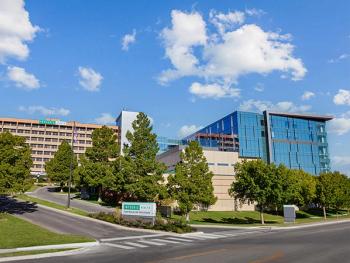
The new hospital, slated to open in 2030, will be named in honor of Felicia and Ben Horowitz in honor of the contribution.

Karen Knudsen, the CEO, talks about the mission of improving patient access and commercialization of cancer therapies, and the need to do it more quickly.
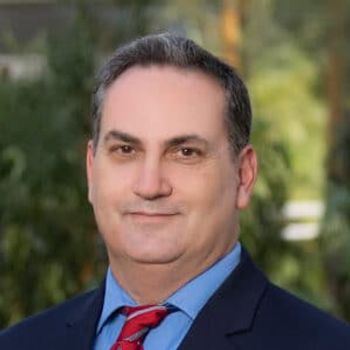
After spending her entire career working in cancer research, Karen Knudsen is now leading an organization with a bold and very specific mission.
Knudsen serves as the chief executive officer of the Parker Institute for Cancer Immunotherapy. And she says the institute is not looking for small gains.
“We are looking for cancer cures,” she tells Chief Healthcare Executive®. “That's what we are doing.”
Knudsen began leading the institute in March. Previously, she served as the CEO of the American Cancer Society. She spent years at Jefferson Health in Philadelphia, where she helped shape the health system’s strategy on cancer.
Now with the Parker Institute for Cancer Immunotherapy, Knudsen talks about the focus of the organization and the aims to accelerate discoveries that transform cancer research and treatment.
The vast majority of cancers are solid tumors, and most metastatic solid tumors have no cure.
“This is where we think that immunotherapy, based on what we know so far, has an opportunity to be game-changing,” Knudsen says.
(See part of our conversation in this video. The story continues below.)
‘Interested in ambitious science’
The institute was founded nearly a decade ago by Sean Parker, the co-founder of Napster and Facebook’s first president. A nonprofit organization, the institute has supported more than 1,000 researchers and its portfolio includes 17 biotech ventures, with over $4 billion raised.
Knudsen says she was recruited by Parker to head the institute. She says Parker talked to her about being someplace that gets rid of the bureaucratic red tape around research. She says the institute’s model drew her to take the job.
“He said to me on the first day we met, that he was not interested in incremental science,” Knudsen says. “He was interested in ambitious science, the kind of science that is going to have a high fail rate, and that somebody's got to get behind that, and that should be us.”
The Parker Institute finances cancer studies, but it doesn’t employ typical granting mechanisms. The institute searches for promising studies and forms master service agreements with those institutions.
The Parker Institute also embeds with the technology transfer offices of those institutions and helps launch early stage companies, and will shepherd those companies to patient testing and commercialization, she says.Knudsen acknowledges that the organization is getting behind “high risk” studies, but the institute also looks to reduce the level of risk.
“These are not founders we found in the wild,” she says. “These are founders we got behind from the very beginning. So that we have an opportunity to pull in investors alongside us who understand and can ask us deep questions about what differentiates this new technology, where the risks live, and what has to be true in order for that to generate a curative, accessible therapy.”
And the goal is to get to treatment faster.
It can take up to 15 years between a scientific discovery for a therapeutic for cancer and approval from the Food and Drug Administration. Knudsen says the institute is aiming to speed up that timeline.
“We're out to beat that number, by a lot,” she says.
Turning cancers into curable diseases
Knudsen says she doesn’t discuss the search for cures casually, noting that’s not language that she used at the American Cancer Society. At the cancer society, the mission was to improve the lives of cancer patients and their families.
At the Parker Institute, Knudsen says, “Our ambition is higher.”
“It is a new vision statement to convert all cancers into curable diseases,” she says.
The North Star of the institute is focusing on solid tumors, which are difficult to treat. She has hopes that immunotherapy can eventually lead to more lasting results than chemotherapy and radiation.
“When you successfully administer immunotherapy, it works for a lifetime,” Knudsen says. “Because it's the immune system retraining, especially the kind of immunotherapy that we're thinking about now. So I do think that that's where the durable heroes are going to come from.”
Knudsen points to success in reducing cancer mortality, with
But she says the uncomfortable truth behind those figures is that much of the success in reducing mortality has come from preventive measures, including reducing smoking.
“If we're going to continue to put dollars into cancer therapies, I think we have to have the goal of them being curative, and I'm not seeing that happen without immunotherapy playing a major role,” she says.
Knudsen says she’s loved every job she has had. At the American Cancer Society, she had to help get the organization on more solid financial footing.
With the Parker Institute, she says she’s working with the organization’s board to shape the vision of the organization and find the best opportunities to make a difference.
“If I have a secret sauce, I think it's building the right team, that's fit for purpose, for what it is that we need to do,” she says. “And, I certainly wouldn't take an organization on if I thought that I wasn't the right person to take it to the next level.”