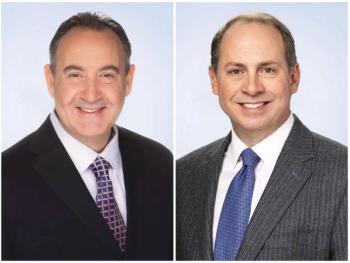

Sr. Mary Haddad talks with us about Medicaid cuts, more uninsured patients and the financial toll on hospitals.
About 1,200 at the National Institutes of Health are being forced out, including some key leaders. The cuts are part of the broader layoffs and reorganization of the Department of Health & Human Services.
Amidst the layoffs and reorganization of federal health programs, advocates for medical research are alarmed at the cuts at the National Institutes of Health.
Workers across the U.S. Department of Health and Human Services began receiving their dismissal notices last week, including staff at the NIH. The health department’s plans call for 1,200 staff at the NIH, or about 6% of the agency’s staff.
There could be more NIH staff dismissals coming. Some additional NIH layoffs could be in the works,
Research advocates are worried about the ouster not just in terms of numbers but in terms of leaders. The leaders of four of the NIH’s institutes were placed on leave, according to
The NIH is the federal government’s largest source of funding for medical research. Healthcare and research advocates such as Research!America criticized the mass layoffs, which have also targeted the Food & Drug Administration and the Centers for Disease Control & Prevention.
“These federal agencies under the umbrella of the Department of Health and Human Services (HHS) help develop new treatments to serve patients safely and effectively, and guard against threats to the public’s health overall,” Research!America said in a
“Efforts to reorganize and streamline the work of federal agencies should be implemented after careful study and with input from stakeholders, including patients,” the group said. “That is not the case with these layoffs, which appear hurried and slipshod, serving only to slow our progress toward new treatments for patients and weakening our global leadership in science.”
U.S. Health & Human Services Secretary Robert F. Kennedy Jr., who was a frequent critic of the NIH for years, said that the layoffs were going to be aimed at bureaucrats and the agency would keep the key personnel involved in health and research. The health department says it's eliminating redundant positions in human resources, communications and information technology.
Public health leaders say
Former NIH Director Harold Varmus, who led the agency for six years in the 1990s, criticized the cuts. “Going after these people without due cause or process is outrageous,” Varmus told
The layoffs also took place as Jay Bhattacharya, MD, the NIH’s new director,
Universities and academic medical centers were outraged when
The NIH has also canceled other grants for research, prompting a lawsuit that was filed last week.
Some researchers have
Researchers, joined by the American Public Health Association, the Center for Science in the Public Interest, and other groups, contend that the NIH has canceled some grants due to ties to “gender identity” or “diversity, equity and inclusion” but hasn’t said how they apply to the studies losing funding. The plaintiffs also contend that the NIH is withdrawing support for research addressing health disparities and vaccine hesitancy.
Dr. Peter G. Lurie, president of the Center for Science in the Public Interest, said he was consulting on an NIH-financed study examining the impact of access to drugs aimed at preventing HIV.
“To exclude from consideration in human medicine the health outcome disparities between one ethnicity or the other, or one sexual orientation or the other, is to strike at the heart of the scientific enterprise,” Lurie said in a statement.
“To tell physicians, clinicians, and researchers what they must not study is to tell them what questions not to ask, what answers not to find, and which patients not to help. This will have devastating consequences for those relying on government progress on HIV, Alzheimer’s, diabetes, or other public health challenges, if not reversed by the courts,” Lurie said.
Even before the layoffs and reorganization, scientists and healthcare leaders expressed growing concern for the NIH’s future. The NIH had enjoyed decades of bipartisan support in Congress, but Republicans and President Trump repeatedly bashed the agency in the COVID-19 pandemic.
In
“This time, the policies, including cutting funding and firing scientists, are being implemented very quickly, unfortunately without sufficient consideration of the harms that are being done,” Collins told Time. “Medical research institutions across the country are in crisis.”