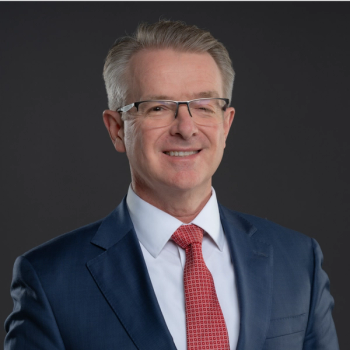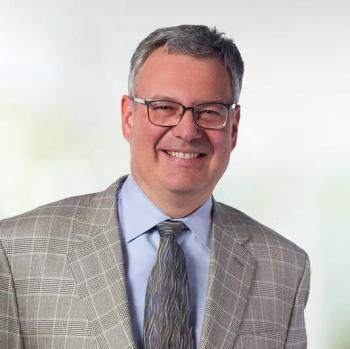
Hospitals are facing more complexity, rapid change, and financial headwinds. They need to position boards to help guide systems.
The head of the New York pediatric system talks with Chief Healthcare Executive about expanding access to help more patients in the hospital and in their communities.
Few organizations boast as little turnover at the top as Blythedale Children’s Hospital.
Nathaniel Beers, MD, just took over as the president and CEO of the pediatric specialty hospital in New York in November. His predecessor, Larry Levine, held the post for 24 years. Before Levine, Robert Stone led the hospital for 40 years.
Beers tells Chief Healthcare Executive® that he relishes the opportunity to lead Blythedale, based in Westchester County near New York City.
“It, for me, is sort of a culmination of all of the various aspects and things that I've done across my career, coming together in a single job and allowing me the opportunity to think about, how can an organization that has been around for 135 years, really think about what the next 135 look like,” Beers says.
He says he wants to ensure Blythedale remains a leader in caring for kids with complex health needs. He says he also wants to explore “where we exist in the continuum of health care with the changing healthcare landscape.”
“So it's an exciting time for me,” he says. “I'm thrilled to be here and thrilled for the opportunity to lead this team, and really feel privileged to come into an organization that's so well positioned to be able to do the things that we can do now.”
(See part of our conversation with Dr. Beers in this video. The story continues below.)
‘There’s more potential’
While Beers says he’s looking forward to leading Blythedale for a long time, he does make it a point to manage expectations.
“I've been clear with people, I won't be here for 26 years,” he says with some humor. “I'm too old to make that type of commitment.”
But Beers says the organization’s consistent leadership has played a key role in its success.
“We've got a group of people who are here who are committed to the mission and really committed to doing what they can to improve the quality of lives for the patients and families we serve,” he says. “And so having that type of stability really sets us up for great success … to think about, where there is opportunity for innovation, and where can we step forward and own the leadership role that we should be having in those spaces.”
Before joining Blythedale, Beers served as executive vice president of community and population health at Children’s National Hospital in Washington, D.C. He also held leadership roles in the Washington D.C. public school system and the district’s health department. And he has served on the International Medical Advisory Group for Special Olympics International.
Since he’s coming to Blythedale from outside the organization, Beers says he has been deliberate about learning from others in the organization and giving them a chance to get to know him.
Since the health system is in good shape, Beers says that eases some of the pressure in the transition and building support.
“I'm not coming into an organization that's in crisis and needs me to make changes tomorrow,” Beers says.
“The reason I was hired was because the board recognizes that there's more potential that exists there,” he adds. “And so bringing someone in from the outside who may bring new ideas and may have different perspective is an opportunity for us to think about how we're going to grow.”
Serving more kids
More than three quarters of Blythedale’s patients are covered by Medicaid. With states facing
Beers says it’s important that “we are thinking together about how children can be protected as states are forced to make some changes around Medicaid coverage.”
While cuts in Medicaid programs figure to translate to adults losing coverage, Beers says there can be a ripple effect on children as well if their parents no longer have coverage and face more healthcare challenges. He worries about
“Our patients depend on a wide variety of social net services and safety net services that are about making sure that they can get to school, and making sure that they have adequate nutrition and making sure that they have access to appropriate housing, particularly for our kids who are medically complex,” Beers says. “All of that costs a family more out of pocket. And so additional cuts in other social safety net programs will have a great degree of impact on the patient population we're serving.”
Blythedale is also looking to find ways to care for more patients.
“We are incredibly fortunate to be very full most of the time,” Beers says. “But what that means is that there is a whole cohort of children who we're not currently able to serve, who we would love to be able to serve.
‘And so for us, it is thinking about what are the right places and spaces for us to be able to think about expanding our capacity to serve, whether that's on the inpatient side or outpatient side, or thinking creatively about how we are partnering with home care entities so that they feel more confident in taking care of these patients, by thinking about where remote monitoring fits into those pieces,” he says.
Beers says he wants to devise strategies to have a bigger impact on a larger percentage of residents across New York.
“We have children from all over New York State,” Beers says. “And certainly that family who's from upstate New York is hampered in engaging in the care adequately. And so, how do we think about how we are supporting them both while they are here, but also thinking about how we support them in their own community that they will return home to as well.”