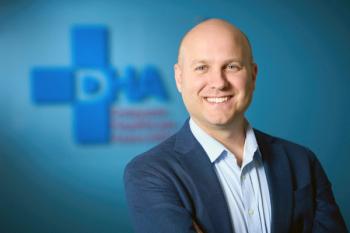
Brian Frazee, president and CEO of the Delaware Healthcare Association, talks about funding challenges and serving a growing population.
For now, the conflict isn’t expected to have a major impact on supplies, but it could lead to higher costs for some drugs. Hospitals are advised against stocking up, which could create shortages.
With the U.S. at war with Iran and the disruption to shipping in the Strait of Hormuz, a critical waterway for oil transports, health systems are watching to see if there is any potential for disruptions in medical supplies.
Hospitals and other healthcare providers should be monitoring the situation, but for the time being, analysts aren’t expecting a disruption in drug supplies due to the conflict in Iran.
Michael Ganio, senior director of pharmacy practice and quality for the American Society of Health-System Pharmacists, tracks drug supplies closely. He says providers and patients can breathe a little easier if they’re worried.
“There's no need to panic,” Ganio tells Chief Healthcare Executive®.
“It is something just to keep an eye on,” he says. “And unless this expands substantially or extends for months, we're not expecting substantial impact.”
The Persian Gulf isn’t a huge source of production of pharmaceuticals.
“There is some drug manufacturing directly in Israel, which currently isn't under threat. But if this escalates and expands, that can be problematic,” he says.
Teva Pharmaceuticals is based in Israel, but the company also has manufacturing plants across the United States. There’s also some production in Jordan, which so far hasn’t been affected, Ganio says. And he says most products from the region can be sourced elsewhere.
Pricing impacts
Still, Ganio says there could be some impacts on pricing. With Iran effectively closing off the Strait of Hormuz, some goods are being transported by planes, which is more costly, he says.
“It is more a matter of cost than it is a matter of whether or not we see the drug supply chain disrupted,” Ganio says.
The Persian Gulf doesn’t produce huge quantities of medication or active pharmaceutical ingredients, Ganio says. But the region provides petrochemicals that are used in the process of making some pharmaceuticals, and that could lead to an uptick in prices.
If the conflict continues for an extended period, that could have an impact on generic drugs and drugs covered by Medicaid, Ganio says.
Generic drugs, including sterile injectables, already have slim profit margins. So if the costs rise, manufacturers would have to either absorb the costs or raise them, which could trigger penalties from Medicaid.
In some cases, Ganio says, such scenarios have “led to a business decision for manufacturers just to stop making something. So that's more of a long-term concern.”
If costs on those drugs rise, or some companies pull back on certain generic drugs, that could prove to be problematic for
Don’t stock up
At this point, hospitals shouldn’t stock up on certain drugs in anticipation of a supply crunch, Ganio says, because that could actually create shortages and make matters worse.
“That's why we try to discourage buying as much as possible, because it can create the secondary shortages it can when none existed in the first place,” Ganio says. “So we're always cautious about what we report and how we report it, so that it doesn't create a situation where a buyer thinks this critical shortage is imminent, and then next thing you know the local distribution center’s shelves are depleted, and then other pharmacies or hospitals can't get a product that they should be able to access.”
Plus, Ganio says that there’s no point in stocking up since it’s unclear where there could be potential disruptions.
“We don't even know what might be affected,” he says. “These are so far upstream at this point.”
Kyle MacKinnon, senior director of operational excellence at Premier Inc., told Chief Healthcare Executive® in
“Historically, those sudden shifts in purchasing behavior during the early stages of a disruption could unintentionally create artificial shortages,” he says. “And we want to again, make sure that we can preserve the supply availability for all healthcare systems.”
Analysts say that hospitals should be engaging their suppliers regularly to verify the availability of drugs and other medical supplies.
April Giles, executive director of the End Drug Shortages Alliance, a nonprofit organization, suggested hospitals to maintain their current buying patterns of supplies
“Premature changes in ordering behavior present a greater near-term risk to supply stability than current conditions and may contribute to unnecessary strain on the system,” she wrote in
Mark Hendrickson, director of supply chain policy at Premier Inc., said in a March interview that hospitals typically have “a certain amount of safety stock.”
If the conflict in Iran continues for an extended period, then there could be potential problems.
Hospitals and health systems continue to deal with shortages of certain drugs. There were shortages of 216 drugs at the end of 2025, according to ASHP data.
That’s down from
"It's still something that our frontline pharmacists are managing,” he says. “In some cases, patients may still not be getting the drug of choice.”