Cyberattacks don’t end in an hour. Hospitals must understand what real recovery demands.
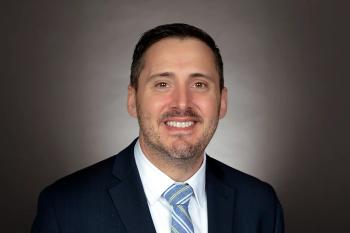
Michael Hamilton, founder and chief information security officer of Critical Insight, talks about trends in attacks and emerging threats in the coming year.
Hospitals and health systems have been struck by scores of cyberattacks, and Michael Hamilton says 2023 has been the worst year ever in terms of the number of people affected by health data breaches.
Hamilton is the founder and chief information security officer of Critical Insight, a cybersecurity firm. In the latest episode of the Data Book podcast presented by Chief Healthcare Executive®, Hamilton discusses the difficulties hospitals and healthcare organizations face in cybersecurity.
Hamilton notes that even though the number of individuals affected has scored, the number of organizations that have suffered breaches has remained fairly stable. He notes that attackers are increasingly trying to get into health systems by accessing vendors and partners.
“There is an increasing focus on coming in through a third party,” Hamilton says.
“Going through a third party, which has poor controls, which may be a service provider to hospitals, large and small … that's the way that they're going, and they're really going after the records,” he says.
In addition, some attackers are also moving from phishing to what he calls “vulnerability exploit,” as criminals race to find vulnerabilities in technology after they are announced and before they can be patched.
“You’ve got to get it patched before they find you, because they start looking immediately,” he says.
Hamilton also discussed the risk of cyberattacks in patient care, which is
Last month, Ardent Health Services disclosed
Given the threat to public health from attackers inside and outside the country, Hamilton says the government needs to do more to protect hospitals and patients.
“The federal government has got to get much more into this fight,” Hamilton says.
The government needs to give health systems more resources, he says.
“More funding needs to be made available to the healthcare sector,” he says. “And I think more importantly, we need to start making people available to the healthcare sector, because right now, they cannot attract and retain qualified practitioners.”
Hamilton also discusses
“The states, I believe, will follow New York's lead in creating nearly identical regulations,” Hamilton says.
Healthcare executives need to be engaged in cybersecurity, and he notes that regulatory agencies are sending the message that, “You have to lean into governance.”