
A Deloitte report estimates significant new investments, and says interventions could add 20 years to women’s health span.
Courtney Holladay, chief learning officer of MD Anderson, talks about overcoming resistance, managing the pace of change, and why over-communication is a myth.
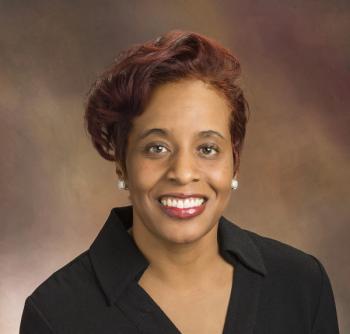
In the healthcare industry, Courtney Holladay says that change is a fact of life.
Holladay, the vice president and chief learning officer of the University of Texas MD Anderson Cancer Center, says change shouldn’t be viewed as disruptive.
She talked with Chief Healthcare Executive® about how MD Anderson prepares leaders to manage change. She also offered insights on how healthcare leaders can support their teams in navigating new technology, procedures and strategies.
“What we've done is really elevate change and reactions to change as a key performance indicator,” Holladay says. “So it's something we're tracking how we're doing in regards to change on our employee engagement survey, and so we're tracking and getting feedback from our employees to ask them: how are executive leaders planning or leading change? We're asking, are they feeling supported?”
MD Anderson leverages that feedback to examine how staff, and leaders, are managing changes, and she says staff responses have led to better infrastructure around change.
Holladay says MD Anderson’s leaders understand helping staff navigate change is part of their role.
“Every leader is expected to demonstrate competency in change leadership, and that is something that they need to be able to demonstrate on a regular basis,” Holladay says.
From resistance to adoption
Many people aren’t big fans of change, Holladay says.
“Whether you're talking about AI or any other change, there is naturally, as humans, resistance to change,” she says. “We like what we like. We like our routines.”
In introducing change, Holladay says it’s important to create opportunities for staff to raise concerns, including some that top leaders may not have considered.
“The need to gather and hear feedback is critical, not only for those individuals to surface their concerns, but also to help move people from resistance to adoption,” she says.
Holladay says it’s also vital to link the introduction of change throughout the system to “psychological safety," particularly when the use of new procedures or tools involve patient care. If employees have genuine concerns that a change could endanger patients, they need to know they can speak up without fear.
“We need individuals to feel comfortable that they could raise those issues and say: time out,” Holladay says.
When staff are raising concerns about changes that could affect patient safety, she says those issues can’t be dismissed as simply staff wanting to cling to their own routines.
“We spend a lot of resources and time invested within our institution to make sure psychological safety exists, so that people do feel comfortable to raise those issues,” she says.
Change champions
MD Anderson employs “change champions” and representatives from across departments to provide feedback. Those leaders can help identify potential problems that may not have been considered.
Just as importantly, those change champions also can help others see the value in new approaches. A nurse who is finding success with a new digital tool can help other fellow nurses see the advantages.
“Their credibility when it comes to how the change is going to impact is that much greater because they're in the same kind of world. They're in the same work, and so they can speak to some of that,” Holladay says.
Managing the pace of change
Holladay endorses “the drip approach” to gradually introduce change in the organization.
“You're kind of watering the seed along the way so that it doesn't feel like this huge, big bang when the change is introduced, but something that you start planting the idea, sharing what it is, and then dripping that information so that there is an opportunity for people to get comfortable with it, raise concerns, feel heard,” she says. “And by the time the change is implemented, they're like, ‘Oh, okay, I get why we're doing it.’”
With some changes, gradual implementation isn’t always possible, Holladay acknowledges.
But when a health system is choosing to make changes, Holladay says it’s best to implement them with care and time.
“When it is a choice, we have to be very methodical and how we approach that change and introduce it within the institution,” she says.
At MD Anderson, Holladay says the health system has an enterprise-wide view of the changes being introduced in the organization, including teams that are impacted by those changes. Representatives from each major area of the system are consulted to look at those changes to make sure MD Anderson is pacing change appropriately.
If leaders see the organization or a department is approaching critical mass on how many changes can be absorbed at once, Holladay says the system will slow some initiatives down or put the brakes on introducing new changes.
If MD Anderson is looking to launch a pilot program and leaders see one group is already dealing with a lot of change, Holladay says they’ll look to another department.
Different approaches to training
When making changes in an organization, health systems need to recognize that staff members benefit from different approaches to training.
“Learning is often not a one-size-fits-all model,” Holladay says. “And to that end, the training needs to be available in multiple modalities, and to meet individuals where they are, whether it's because they're different generations, because they have different learning styles.
“There are all kinds of reasons why different modalities are necessary, and especially on a technical change that we're rolling out, we are providing multiple avenues for individuals to have the learning in the way that's best meant for them,” she says.
Some will benefit from sessions led by instructors, Holladay says. But she also says it’s a good idea to have training guides that staff can access anytime they are needed.
“We still want to make sure that we have micro-learnings available, because, especially on the technical change, we see people need it just in time,” Holladay says.
Some of those learning opportunities can involve short videos, but they also include setting up open hours for staff on site to get additional guidance. MD Anderson will also provide hours for staff who work remotely to connect for instruction.
Over-communication
As leaders look to make changes in the organization, they need to make sure they are explaining what is coming.
“If you feel like you have said it a few times, that's not enough,” Holladay says. “Once you've probably gotten to the point where you’re feeling like you've over-communicated, you've probably just communicated enough.”
Leaders must understand that staff are dealing with a great deal of noise, and they are often filtering new information until they hear it in a way that’s going to impact them. Often, employees aren’t fully processing what leaders say.
At MD Anderson, one of the competencies for change leadership is frequent communication, and she says being repetitive with messages is crucial.
Organizations also shouldn’t wait to introduce change until every facet is in place.
“It's a tendency we want to come with the fully wrapped-up-in-a-bow version of the change, like it's perfect, it's ready to go, and here it is,” Holladay says. “But that often can backfire on the implementation of the change, because people are surprised by it, and so they're trying to process the change from not only a rational perspective, but an emotional perspective. And when that emotional perspective is happening, they can't be rational in the change.”
Leaders also need to explain the rationale for changes in order to get buy-in from staff. If new procedures are designed to improve safety, patient satisfaction, or staff retention, leaders will have more success if they communicate those goals.
Health systems also need to stress how changes can benefit staff. If new tools are designed to make work easier for staff, that’s worth sharing and repeating.
“What's in it for me … is a critical component of the communication,” Holladay says.