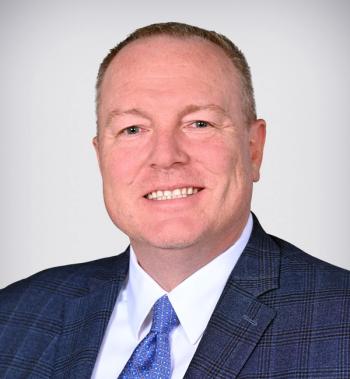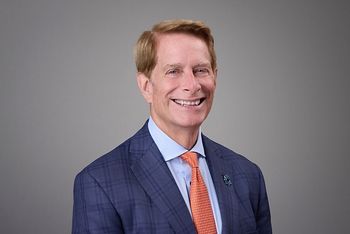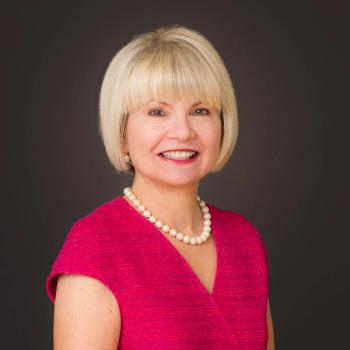
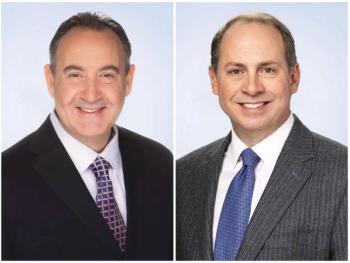
Dr. Jonathan Perlin will step down at the end of 2026, and Dr. James Merlino, the COO, will succeed him. They spoke with us about the transition.
Recent reports of a new team at the FDA that will try to match healthtech's pace of innovation mesh with previous writings by the Administration's recently-appointed head, Scott Gottlieb.
Fast as development is today, the Food and Drug Administration’s Bakul Patel, an Associate Center Director for Digital Health, recently told Wired to only expect it to be faster tomorrow. This is natural, as digital progress is inevitably exponential. The process of regulation, however, does not improve so exponentially, and for that, Patel’s organization must act.
Today, it was reported in that same
The article does not dive too far into the details, though it mentions that the new team will 13 people and potentially comprised of developers, cloud computing professionals, and AI experts, among others. Despite an ongoing hiring freeze at the Department of Health and Human Services, the baker’s dozen will be hired using funds from the Medical Device User Fee Amendment.
The content of Patel’s new program does seem in harmony with some of the themes FDA Cybersecurity Project Manager Seth Carmody spoke of in an
Despite coming in during the previous federal administration, with all of its ideological differences to the current, Carmody also stressed that compliance to regulation was less of a priority than verifiable product security, and he spoke of the need for both regulators and innovators to “mature together” in the process of refining approval for new medical technologies and security updates, a process of pre- and post-market approvals that can devolve into lengthy back-and-forths between companies and regulators.
Patel’s new program seems aimed to mitigate things like that “maturity” gap between federal government regulators and the tech industry, a gap that could widen without timely action. He speaks of an impending “zero-code world” where AI writes the code for you based on concept, and how that will make the already-head-spinning speed with which Silicon Valley produces new software and devices seem slow by comparison. As such, the article indicates a proposed environment that will run much like a startup, with a goal of novel regulation to match pace with innovation.
For a long time before his nomination and recent confirmation as the FDA head, Scott Gottlieb has been writing lengthy opinions in Forbes about changing regulatory administration’s approach to novel technologies, which as well reflect the “clean sheet” Patel speaks of as they do the difficulties in pre- and post-market approval that Carmody built his talk around. In 2015, Gottlieb
The onus of such approval processes, according to Gottlieb, kept big product developers like Apple, Microsoft and Google from “building health capabilities directly into their products, fearful that it would subject these platforms to FDA oversight…so it’s falling to smaller outfits to try and build these capabilities as add-on apps and get the necessary FDA approvals.”
This conceptual distinction seems to mirror Patel’s intentions, which he says stemmed from a lightbulb that went off in his head when looking through comments on FDA guidelines for digital health. The article sets up an idea like TSA priority screening, in which trusted companies with “demonstrated histories of excellence could keep their footwear and stroll through the metal detector.”
“The idea is to get safe products to market faster, by having people compete on excellence rather than compliance,” Patel says.