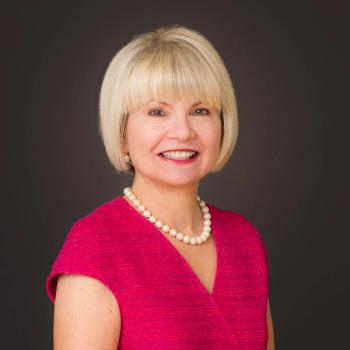
Maria Ghazal, president and CEO, talks about finding consensus across the healthcare ecosystem and in Washington.

In a conversation at the HIMSS conference, Mehmet Oz, the CMS administrator, said tech needs to lower costs, and AI is going to play a bigger part in Medicare.
Las Vegas - Dr. Mehmet Oz, the administrator of the Centers for Medicare & Medicaid Services, said the healthcare system needs more than improvement.
Speaking at the HIMSS Global Health Conference & Exhibition Thursday, Oz said the system needs to be completely overhauled. And he outlined some of his plans.
“The current system will not work,” Oz said. “I don't know how many times this is said to us. I've been hearing it for decades and never really processed it.”
Now that he’s running CMS, the largest payer in the world, Oz said he sees a clearer picture.
Other industries are using technology to lower costs for consumers. Oz says that’s not happening in health care, and he says that needs to change.
“If you look at the cost increases in health care, the doctors’ salaries and nurse salaries are increasing at slower than the inflation. Pharma is increasing at the rate of inflation. Hospitals are increasing at twice the rate of inflation because they have manpower issues. They have technologies that have not been able to keep up with the complexity of care they give,” Oz said.
“The reason health care, historically, is not taking technology and used it in the way that we thought it could be used, and it's actually been inflationary, is we use technology at the end of the care cascade,” he added.
Hospitals are using tech to deliver more costly care for patients who need an MRI or are coming in for a heart attack.
Instead, Oz said he wants to “win the battle for health, not in the ER or in the ICU, but in your home, in your kitchen, your bedroom, in your living room, with remote patient monitoring and better tools.”
A heart surgeon, Oz said that a key to helping patients survive a heart attack is the administration of Lasix, a drug that helps people pass fluid, or, as Oz said on stage, “It helps you pee, literally getting you pee the fluid out helps.” But if doctors could get a patient that drug at home, the patient doesn’t need to come to the hospital, he said.
“You never come in the ER, you don't die, you don't go to the IC, you don't pass go, and you don't get to collect $200 for the health care system either,” Oz said. “The whole thing works better for us.”
“We have such a wonderful opportunity to use technology to be a deflationary, stabilizing force to allow improved care, better quality, and for that reason, across the board, allow us to fulfill our missions, as Americans. It would be shameful if we didn't take it.”
AI for Medicare beneficiaries
The Medicare program is also going to be utilizing AI, and Oz wants that to happen in a hurry.
Oz said he loves “this whole concept of bringing AI into the ecosystem of
He shared an idea being discussed internally within CMS to introduce AI agents to guide Medicare beneficiaries to services.
He said he’s asking, “Why couldn’t we, by the end of this year … start to introduce agentic AI for every beneficiary of Medicare? It may not be ready to be launched by the end of this year, but by the time we're done in this administration, for sure, it should be out there.”
“Telecom companies are doing this now, banks are doing it, …. I mean, you can buy a mortgage with agentic AI giving you advice,” Oz said. “You should be able to use that same technology to help you pick which MA plan to use, your Medicare Advantage plan, or which doctor to go to.”
But Oz said the healthcare industry has some work to do to convince Americans of the benefits of AI. He says CMS has surveyed Medicare beneficiaries on their thoughts about AI and found reluctance among Americans.
“They do not trust AI,” Oz said. “No one has gotten to them with the use case of why it will transform their life for the better. It seems like a tool that we use to market to them, or help hospitals deal with the issues, but not necessarily their issues.”
Oz challenged the healthcare leaders in attendance, and HIMSS, to recognize that they have to work to reach people to help them grasp the value of AI tools and how it will improve their lives.
“If we use this right, it will save lives, transform your ability to get access to care, allow us to manage a $1.8 trillion business, and we'll all be better off,” Oz said. “If we use it wrong, shame on us. But also, we have to be engaged in that process. We can't run from it.”
Rural health
Oz also talked about the
He said digital tools can help provide access to care, particularly in behavioral health. While mental health clinicians are in short supply everywhere, the shortages are profound in rural areas.
“I can't buy mental health practitioners,” Oz said. “They don't live there. They don't want to work there. They don't want to be there. It's not going to happen.”
The rural health program eventually should produce benefits for all communities, Oz said.
“It's not just about rural health care,” Oz said. “When you get $50 billion to the rural health care system, what they learn is translatable to urban health care.”
Pointing to his previous work as a surgeon in New York City, Oz said, “South Bronx medicine has a lot of similarities to Appalachian medicine.”
Oz touted the Trump administration’s investments in rural health care as historic, but hospital leaders have said the money won’t offset
Rick Pollack, president and CEO of the American Hospital Association, told Chief Healthcare Executive in
“It provides an opportunity for help,” Pollack said of the rural program. “I would never say that $50 billion is a modest investment in anything. But the fact of the matter is, when you compare it against the trillion dollars in cuts, proportionately, it doesn't fill any gaps.”
KFF, which examines health policy, estimates that
A recruiting mission
While Oz talked about some of the areas where the healthcare industry has fallen short, he still maintained a friendly tone with the audience.
At the outset of the conversation moderated by
“I'm here to recruit you,” Oz said. “This is a recruiting trip.”
“We all came out here because we're looking for more good people, because what we're doing is so important to the future of our country, we have a crisis,” he said.
CMS also had a recruiting booth on the showroom floor at the conference, making it clear that the agency is hiring. Healthcare leaders have said CMS has been hiring more and more tech experts.
At the conclusion, Oz and other CMS leaders took a giant group photo with the thousands of healthcare leaders in attendance behind them. Just before, he made one last pitch to those in the audience to come to the agency.
“Please come work for CMS,” he said.