
A Deloitte report estimates significant new investments, and says interventions could add 20 years to women’s health span.
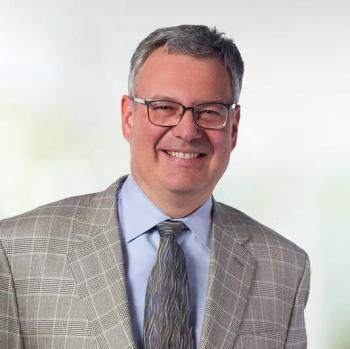
Dr. Claude Pirtle, president of Heartland Whole Health Institute, talks with us about an effort to help hospitals set up and sustain programs.
Like some other states, Arkansas doesn’t have enough residency slots for medical school graduates.
But Arkansas is dealing with a profound physician shortage and can’t afford lose doctors who may be willing to practice in the state but can’t find a residency.
The
With the new medical school’s first graduates coming in 2029, there is a glaring need for more residency slots, says Dr. Claude Pirtle, president and CEO of the Heartland Whole Health Institute.
The institute has established the Graduate Medical Education Technical Assistance Center to help hospitals set up residency programs and make sure that they’re sustainable.
“This is unfortunately an issue for a lot of states,” Pirtle tells Chief Healthcare Executive®. “Just to be transparent, residency is really where the bottleneck is.”
Currently, Arkansas graduates about 430 medical school graduates, and there are 375 residency slots each year. In 2029, the new Alice Walton School of Medicine expects to produce 48 graduates, meaning at the current pace, there will be more than 100 more graduates than available slots.
Of course, some of those medical school graduates can choose residencies in other states, but that’s not an ideal scenario.
“The problem is once you leave the state, it's much more difficult to get you back,” Pirtle says.
As medical school graduates begin residencies, they often get attached to their communities, find spouses or partners and some begin building families. And that’s where they stay.
“We know that once you finish residency, you're most likely to stay in those areas,” Pirtle says.
He wants to get more of those young physicians to stay in Arkansas.
Heartland’s technical assistance center will work with hospitals and federally qualified health centers to provide services such as feasibility studies of residencies.
The center can also work with health systems to identify sources of funding or grants that can make sure the residency programs are sustainable for the long run.
“You don't want to just create a residency program and have it fail for obvious reasons,” Pirtle says.
He adds that the technical assistance center is offering free services to help establish more residency slots.
“The GME Technical Assistance Center is really looking for anyone who wants to create a residency, has questions, and needs help,” Pirtle says. “ We want to help not just everyone in the state be healthier, but also the state understand, so that we can have a coordinated effort on how we attack this problem.”
The Heartland institute wants to work with hospitals to help establish residencies in specialties where there are glaring needs, including obstetrics and gynecology, pediatrics and others.
“We want to place these physicians in areas that will make a difference,” Pirtle says.
“We have a big delta need in OB/GYN,” he adds. “So we're trying to also prioritize some of that work as much as we can. So OB/GYN, general surgery, urology, among a lot of other subspecialties. How do we get those in the state of Arkansas and get them to stay here?”
Pirtle notes that Arkansas lags near the bottom among all states in diabetes prevalence, hypertension, and obesity.
“There's all these issues we have due to a number of problems,” he says.
The physician shortage in parts of Arkansas is dire, especially in more rural areas of the state, Pirtle says. A third of the state’s residents live in health professional shortage areas, and some residents will drive 30 to 50 miles to get care.
“There's multiple counties in Arkansas that don't even have a physician, period,” Pirtle says.
There’s another need to train and retain more doctors in Arkansas. Pirtle notes that a third of the state’s physicians are over the age of 60 and may not be practicing medicine too much longer, or will at least be cutting back their hours..
“They're going to start retiring, which I don't blame them at all,” Pirtle says. “But how do we create net new physicians and not just replace the ones that are leaving?”
Heartland’s goal is to create 500 new residency slots over the next five years, with the help of health systems and their communities.
“We're trying to really push the limits, if you will, so that we create new doctors to stay in Arkansas, that practice in Arkansas, and enable easy access to care to really great quality care,” Pirtle says.