
A new survey shows 1 in 4 U.S. adults owe a medical debt. Michael Karpman of the Urban Institute talks about how hospitals can help.
The Business Group on Health says employers are seeing higher costs in hospital care and drug expenses. Some are cutting back on GLP-1 coverage and examining vendor contracts.
Employers have been facing higher healthcare costs in recent years, and they are projecting to see another significant increase in 2027.
Businesses are expecting to see a 9.2% increase in healthcare costs next year, according to a
Employers say that in 2026, healthcare costs have risen by a median of 8.5%, with changes in health plans dropping that increase to 7%.
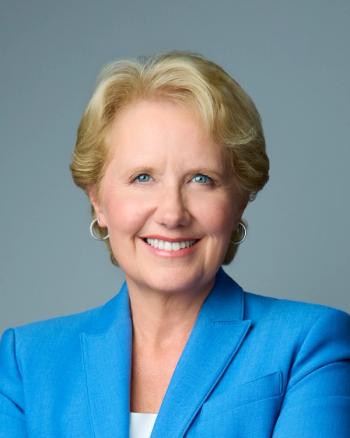
Ellen Kelsey, president and CEO of the Business Group on Health, says businesses are facing more than rising costs. Employers are finding it increasingly difficult to plan and budget for healthcare expenses.
“This volatility is the new reality,” Kelsay says.
“Employers’ ability to accurately predict their healthcare costs is not just a budgeting problem,” she says. “It's emblematic of a bigger picture issue with the overall healthcare system.”
The forecast isn’t exactly sunny now, but Kelsay says that healthcare costs have actually surpassed employers’ initial projections recently. In 2025, employers projected a 6.8% increase in healthcare costs, but actual costs rose 8.8%.
So there is a chance that costs may be even higher than the substantial increases employers are projecting.
“Current forecasts for 2026 and 2027 may actually be too optimistic,” Kelsay says.
Businesses are citing higher costs from hospitals and surging drug prices, and employers are saying they are going to have to consider new strategies in the face of escalating healthcare costs. Some are curbing coverage of GLP-1 drugs for weight loss.
From 2018-2027, businesses project healthcare costs will have risen 76% over that 10-year span, more than twice the rate of general inflation.
Higher drug costs
Kelsay also notes that some businesses are already essentially locked into their budgeting plans for 2027, meaning even if they start taking steps now to control costs, it’ll take time to see some impact.
“Many employers won't have room to make truly transformative moves until 2028 at the earliest, making evaluation, initiation, and the urgency for change all the more necessary,” Kelsay says.
Businesses say they are being hammered by higher drug costs, with employer drug costs projected to rise 12% in 2026. Pharmacy now accounts for 25% of employers’ healthcare expenses.
Employers say they’re willing to get more aggressive in their efforts to rein in spending, with 71% looking at new requests for proposals. It’s worth noting that a solid majority (58%) said they will end relationships with vendors that they say aren’t meeting expectations.
Kelsay says employers typically don’t cut off vendor relationships easily, since organizations have to review contracts and review any potential liability. If so many employers are willing to rethink their relationships with vendors, businesses are clearly anxious to find ways to cut costs or ensure they’re getting a strong return on their investments with their partners.
Businesses are cutting back on coverage of GLP-1 drugs for weight management. In 2026, 60% of employers say they’re covering GLP-1 medications for obesity, down from 72% in 2025.
Some have already cut coverage of GLP-1 medications for weight loss, or are planning to do so, said Brenna Shebel, vice president of the Business Group on Health. Those continuing to provide such coverage are adding stronger utilization controls.
Shebel also offered one telling stat on how employers are viewing GLP-1 coverage.
“Not a single employer will be adding GLP-1 coverage for weight management next year in ‘27,” Shebel said.
Rising hospital prices
Businesses are also growing frustrated with rising hospital prices.
A large majority (62%) of employers said hospital price increases are driving costs to a great or very great extent, the survey found.
“Provider consolidation has reduced competition in many markets, increasing the pricing leverage that hospitals and health systems have over commercial plans,” Kelsay says.
Nearly half (48%) also pointed to rising costs from healthcare costs at outpatient facilities.
“Outpatient facilities have also become a source of increased costs without materially improving outcomes,” Kelsay says.
“In many cases, hospital outpatient facilities, especially those that were previously stand-alone physician offices, can charge facility fees in addition to professional fees for labor, supplies, and other services,” she adds.
Employers are focusing more on hospital prices, Kelsay says.
“Some employers are having direct conversations with health systems and hospitals,” Kelsay says. “They, in certain geographies where they have a large enough concentration, will have a direct contract and directly engage with health systems about not only the cost, but also the quality of care delivered in their system.”
Businesses will also lean on health plans and vendors to press hospitals on costs, she says.“You're going to see heightened vendor accountability on their health plan and insurance partners to do the same on their behalf,” Kelsay says.
Trends worth watching
The report also included other noteworthy findings.
Cancer costs
More employers are citing cancer costs as their leading cost driver, with 70% naming it the top driver in costs this year, up from 58% in 2025. The uptick in cancer costs is fueled by new diagnoses, and more young people are battling cancer.
“We are seeing more and more people diagnosed with cancer at earlier ages,” Kelsay said. “We historically had not seen that happen.”
Innovations in treatment, while a boon for patients, also are driving up costs. Most employers say they’ll rely on health plans’ guidance on cell and gene therapy coverage.
“There's been unbelievable innovation in treatments and therapies for oncology, but they also come at quite a price tag as well,” she says.
Employers have named cancer the top condition for healthcare costs for five consecutive years.
Maternity costs
Businesses cited maternity costs as a rising factor in driving up healthcare spending. More patients are having births with complications, costing costs to rise.
“The transition from bundled to unbundled maternity reimbursement in 2027 is expected to increase cost uncertainty and administrative complexity, raising concerns that maternity costs will increase and become more difficult to forecast and manage in the year ahead,” Kelsay said.
Other top drivers
Employers said musculoskeletal costs ranked second in driving up healthcare costs, followed by cardiovascular expenses.
More businesses are seeing rising costs for gastrointestinal and autoimmune (14%) conditions.
“Gastroenterology and autoimmune were identified by more employers as significant contributors to healthcare spending, both of which are closely tied to specialty pharmacy growth,” Kelsay says.
About the survey
The survey included responses from 127 employers across a mix of industries, with the businesses employing 11 million people worldwide, including 8.7 million in the U.S.