
Craig Newman, the chief strategy officer at HealthChannels for ScribeAmerica, discusses the amount of time that physicians, nurses, and scribes spend on administrative work and how the pandemic has exacerbated the need for things to change.
Craig Newman, the chief strategy officer at HealthChannels for ScribeAmerica, discusses the amount of time that physicians, nurses, and scribes spend on administrative work and how the pandemic has exacerbated the need for things to change.

Hospitals and health systems started to improve digital capabilities as a result of the pandemic, but that momentum is starting to slow, according to new report.

A tool that can accurately measure hospitals’ medical surge preparedness can be beneficial when responding to future crises and large-scale emergencies.

Ransomware attacks tend to increase around holiday weekends, like Labor Day weekend. Here is a look at some recent healthcare data breaches.
Bob Dean, the nursing homes' owner, has previously been cited by state officials for evacuating patients to a facility he owned that proved to be inadequate.
Interim executives are made permanent at Cleveland Clinic, Inova Loudoun Hospital, and University of Utah (U of U) Health, while Massachusetts General Hospital (MGH) and MD Anderson announce new hires.

The pandemic caused a jump in healthcare-associated infections in hospitals, highlighting a need to return to infection prevention and control practices that were standard before the pandemic.
The partnership highlights the importance of leveraging digital health to improve patient outcomes.
Barry Sample, PhD, director of science and technology at Quest Diagnostics, discusses the rise in drug positivity rates among healthcare employees, the reasons behind the rise, and what can be done to combat them.

Tides are changing a year and a half after the COVID-19 onset, as health systems accelerate hiring.

The merge can make mental health treatment more accessible to patients.
Punit Soni, CEO and founder of Suki, delves into how artificial intelligence (AI) can be used to address burnout among healthcare professionals, as well as misconceptions about the purpose that this technology should serve in healthcare.

Google Health will spread across different divisions of Google.

COVID-19 booster shots will become available this fall.

Although the world is very much still in the middle of the COVID-19 pandemic, a panel of experts tackled lessons learned so far.

The partnership leverages digital platforms to help patients after they leave the hospital.

The owner of multiple telemedicine companies is facing prison time.
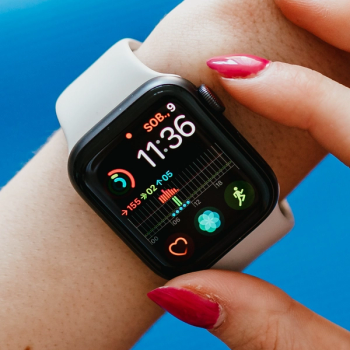
A mind map exercise examines general practitioners' perceptions of the health technology.

At the HIMSS21 Digital Program, speakers from Highmark Health and Geisinger outlined the ways they are innovating to address chronic disease management and the endurance needed to see it through.

In order for artificial intelligence (AI) in healthcare to be successful, there needs to be more transparency around the data that goes into an algorithm, explained John Halamka, M.D., president of Mayo Clinic Platform.

As hospitals’ and health systems’ key performance metrics begin to bounce back from the devastating effects of the pandemic, a surge in COVID-19 cases may threaten their progress.

Hilary Babcock, MD, MPH, infectious disease specialist at Washington University and BJC Healthcare in St. Louis, Missouri, discusses the COVID-19 vaccine and other vaccine mandates in healthcare settings.
Tom Knight, founder and CEO of Invistics, discusses how the COVID-19 pandemic has highlighted the need for better solutions for drug diversion, where healthcare employees commit medication theft, within their healthcare organizations and how technology can help resolve the issue.
By improving their cybersecurity hygiene, doctors can protect sensitive medical information.
In an interview recorded earlier this year, Chief Healthcare Executive Associate Editorial Director Mary Caffrey spoke with 2 leaders of Citius Tech about meeting healthcare challenges with digital solutions.
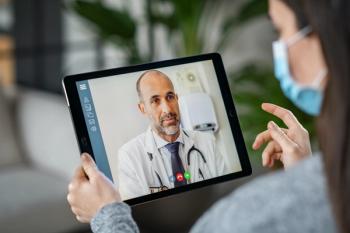
During the pandemic, telemedicine use increased overall, but was more commonly used for established patients and the delivery of psychiatric and behavioral health care and less commonly used for preventive care.
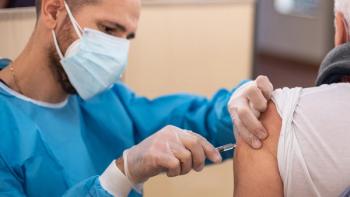
As infections and hospitalizations rise across the country, groups led by the American Medical Association and the American Nurses Association called for mandatory vaccinations of staff.
One proposal asks hospitals for input on how to measure vaccination rates among staff with the aim of letting consumers have the information.

Device would eliminate pain, anxiety associated with the blood collection process through the implementation of needle-free blood draw device.

To date, the focus of RPM has been on the technology itself and its increasing ease of use. The conversation now needs to shift to creating a patient-centric healthcare experience enabled by RPM technology.