

Patients have higher expectations, and hospital executives say the industry must focus more on the customer experience. It was a recurring theme at the American Hospital Association Leadership Summit this week.
Patients have higher expectations, and hospital executives say the industry must focus more on the customer experience. It was a recurring theme at the American Hospital Association Leadership Summit this week.

The e-commerce behemoth is buying the primary care provider, saying the health industry needs reinvention. Analysts say Amazon could succeed.

Eric Martin, vice president of patient services and chief nursing officer at Norton Children’s Hospital, talked about taking care of team members at the American Hospital Association Leadership Summit.

The Cleveland-based system was hailed for its commitment to excellence. Cliff Megerian, the system’s CEO, says the staff aims to deliver care with kindness and compassion.

The attacks are costing health systems millions of dollars and threatening patients. Hospital leaders must develop robust defenses and prepare detailed recovery plans, experts say.

They offered their perspectives on succeeding as leaders, building great teams and the importance of empathy.

Don’t assume even the strongest staff members are OK. Leaders talked about the need for empathy and how they are tending to the well-being of their teams.
Amid daunting challenges, three health system leaders stress the importance of taking care of their teams and making everyone feel valued.
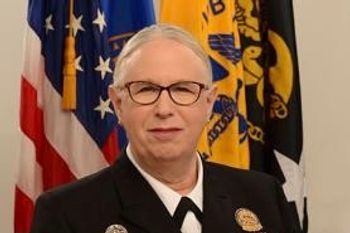
The assistant U.S. secretary of health called on health systems to tackle climate change, saying it’ll improve health outcomes and can help hospitals lower their own costs.
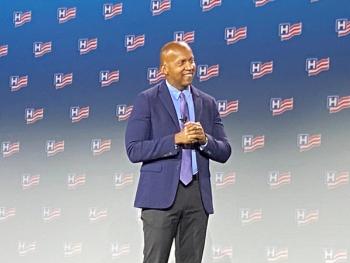
Stevenson, the author of “Just Mercy” and inspiration of the film, has spent his adult life representing the disadvantaged in the criminal legal system. He urged hospital leaders to fight to end disparities in healthcare.

The president of the hospital association said the group will press for federal aid and the continuation of waivers implemented during the pandemic.

Ford, the former congressman, and Jennings, a former aide to President George W. Bush, discussed big issues, President Biden's struggles and the likely rematch with Donald Trump.

The group, which represents more than 4 million nurses, issued a statement of reconciliation and acknowledged it has failed to support nurses of color.

The electronic health records giant says it will join TEFCA, a new national health information exchange framework. With records and data more easily available, patients and providers will see the benefits, Doyle says.
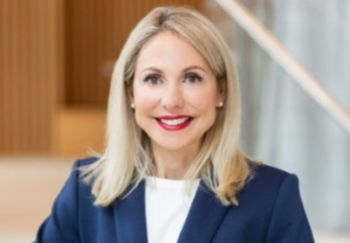
The organization named Heather O’Sullivan as the system’s first president of home-based care. A key leader says “the future of healthcare is in the home.”

America’s largest electronic health record company will be a part of the Trusted Exchange Framework and Common Agreement. Epic’s Matt Doyle says the company will encourage its thousands of partners to follow suit.

The number of transactions in the second quarter was the lowest in years, Kaufman Hall reports. But the small number of deals involved some big players.

President Biden’s administration sent a letter to America’s 60,000 retail pharmacies to ensure Americans have access to reproductive healthcare.

Health equities cost Americans $320 billion, and could surge to $1 trillion by 2040. Deloitte’s Andy Davis talks about ways healthcare leaders can make progress in addressing disparities.

It’s their top pain point, according to a new survey of executives. Leaders are focused on recruiting and retention, but may need to focus more on diversity efforts.

In an interview with Chief Healthcare Executive, Hu discusses the challenges for hospitals and post-acute providers, the potential of data and how health systems need to collaborate.

Secretary Xavier Becerra told providers federal law supersedes state laws restricting abortion. Providers that don't follow the law could lose federal funds.

Deepa Kumaraiah spoke with Chief Healthcare Executive about using data to provide better care, new approaches from the COVID-19 pandemic, and caring for staff.

The organizations make a case for combining physical and behavioral health, but they say policymakers and insurers must step up to make it a reality.

NIH researchers said the body’s own defenses, triggered by the virus, are attacking cells within the brain’s blood vessels. The insight could have implications for treating patients.

Cyberattacks have become an increasingly dangerous threat to hospitals. Jeff Schmidt, president of Avertium, said health systems must recognize the danger and take action.

The FDA has given authorization, with some limitations. The American Medical Association says only doctors should be prescribing the drug used to treat COVID-19 patients.

Advocates for mobile clinics say they can reach patients in underserved communities and help keep some from requiring costly hospital stays.

The Rhode Island system said it weighed other options. While Care New England is looking for partnerships, the board voted to continue operating independently.

The Federal Bureau of Investigation and other agencies issued a warning Wednesday to public health organizations. Health systems are urged to take steps to protect patient data.